
How to Plan Flexible Seating for Outdoor Sports and Recreation Areas
Outdoor sports and recreation areas rarely serve only one purpose. A lawn may host fitness classes in the morning, family games in the afternoon, and spectator seating for an evening event. Pool decks, club patios, campsites, community spaces, and resort activity zones also need furniture that can be moved, stored, and rearranged without a complicated installation process.
Flexible seating helps these spaces adapt to changing activities. Outdoor folding chairs are especially useful because they can provide temporary seating without permanently occupying the site. However, selecting chairs for a recreation area requires more than checking whether they fold. Buyers should consider the activity, ground conditions, storage space, frame material, stability, user flow, and frequency of commercial use.
Why Flexible Seating Matters in Recreation Areas
Fixed seating works well in locations with a permanent layout, but it can limit how an outdoor area is used. Recreation spaces often need to accommodate changing group sizes and different activities.
Portable seating allows operators to:
Create spectator areas for outdoor games
Add rest points beside walking and fitness routes
Rearrange seating for group classes
Clear the area for sports or maintenance
Support seasonal events and temporary programs
Adjust capacity according to attendance
Folding furniture is also easier to relocate during severe weather or periods when the space is closed. For hotels, clubs, schools, event operators, and community facilities, this flexibility can improve space utilization without requiring several dedicated seating areas.
Match the Chair Type to the Activity
Not every folding chair is suitable for every recreational setting.
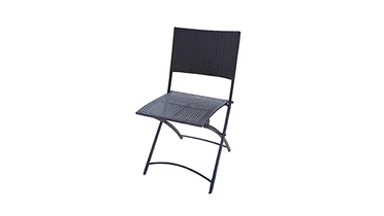
A folding dining chair may work well for post-game meals, patio gatherings, and sports-club dining areas. A folding stool can provide compact temporary seating for short activities, equipment stations, or event staff. A reclining folding chair is more appropriate for poolside rest, camping, sunbathing, or longer periods of spectator use.
Before selecting a model, buyers should define:
Expected sitting duration
Typical user age and body size
Whether users will wear sports clothing or wet swimwear
Required portability
Whether dining or table use is expected
Frequency of setup and storage
Available staff for moving the furniture
Matching the chair structure to the activity helps avoid using an overly heavy model for frequent movement or a lightweight model in a demanding commercial environment.
Plan Seating for Sports Viewing and Lawn Games
Outdoor seating should support the activity without blocking movement.
For sports viewing, chairs should face the activity area while leaving enough room behind each row for circulation. Temporary spectator layouts should also maintain clear access to entrances, exits, first-aid points, and equipment storage.
For lawn games, chairs are often positioned around the perimeter. This keeps the playing area open while giving participants and spectators a place to rest. Small seating groups can also be placed near refreshment stations or shaded areas.
Avoid placing chairs too close to:
Ball flight paths
Exercise equipment
Running routes
Pool edges
Barbecue equipment
Temporary electrical cables
Uneven slopes
A flexible layout should make the site feel organized without reducing the usable activity area.
Consider Folding Size and Storage Requirements
The folded dimensions can be just as important as the open dimensions.
A chair may be easy to use but inefficient to store if its folded frame is bulky or difficult to stack. Before placing a bulk order, commercial buyers should calculate how many chairs can fit in the available storage room, transport cart, service vehicle, or shipping container.
Useful questions include:
Does the chair fold flat?
Can multiple units be stacked safely?
Does the folded frame have projecting parts?
Can one person carry the chair comfortably?
Is a trolley required for larger quantities?
Will stored chairs damage one another?
How much floor and vertical space is needed?
A compact folding structure can reduce storage pressure and make daily setup more efficient.
Compare Aluminum and Steel Frames
Frame material influences weight, strength, maintenance, and handling.
Aluminum frames are generally lighter, making them easier to move between activity zones. They are a practical option where furniture is frequently rearranged or stored. A suitable surface finish can also help the frame withstand normal outdoor exposure.
Steel frames may provide a solid and substantial feel. They can be appropriate for areas where furniture is moved less frequently or where buyers prioritize a heavier structure. However, coating quality and ongoing inspection are important, especially in humid or coastal environments.
The final choice should consider:
Frequency of movement
Required load capacity
Local climate
Storage conditions
Surface treatment
Maintenance resources
Target product cost
Frame material should not be evaluated independently from joint design, tube dimensions, fasteners, and the folding mechanism.
Evaluate Stability on Different Outdoor Surfaces
Outdoor recreation areas may include concrete, decking, grass, gravel, tile, or compacted soil. A chair that feels stable on a showroom floor may perform differently on an uneven outdoor surface.
The leg geometry and foot design should reduce rocking and help distribute the load. Feet should also be suitable for the intended surface and should not create unnecessary scratches on decking or tiles.
During sample testing, evaluate the chair on surfaces similar to the final installation. Check whether it remains stable when users sit down, stand up, lean back, or shift their weight.
For soft surfaces such as grass, narrow feet may sink into the ground. For smooth pool decks, suitable foot components can help reduce sliding.
Review the Folding Mechanism
The folding mechanism is a high-use component and should be inspected carefully.
It should open and close smoothly without excessive force. Once opened, the chair should remain securely in position during normal use. Pinch points should be minimized, and moving components should not create sharp edges.
Commercial buyers should check:
Locking or support structure
Alignment of moving parts
Fastener security
Noise during operation
Resistance after repeated cycles
Clearance around fingers and hands
Ease of use for staff
Repeated opening-and-closing tests are especially important for event venues and recreation facilities where chairs may be handled every day.
Create Safe Movement Zones
Furniture placement should support clear and predictable movement.
Maintain pathways between seating groups and avoid creating dead ends. Users carrying sports equipment, food, towels, or bags may need more room than ordinary pedestrian traffic.
In pool and beach settings, allow space for wet users to move without brushing against furniture. In family recreation areas, consider strollers, children, and older visitors. Accessible routes should remain clear according to the project's applicable requirements.
Portable seating is flexible, but uncontrolled placement can quickly make a site feel crowded. A simple layout plan helps staff return the chairs to suitable positions after each activity.
Maintain Folding Chairs Between Events
Routine maintenance helps preserve appearance and function.
Remove dirt, leaves, sand, food residue, and moisture after use. Wicker or fabric surfaces should be cleaned according to their material requirements. Frames, hinges, fasteners, and feet should be inspected regularly.
Pay particular attention to:
Loose hardware
Bent frame components
Damaged weaving
Worn feet
Surface scratches
Stiff folding joints
Water trapped in structural areas
Chairs that show structural damage should be removed from service until they have been evaluated.
What Commercial Buyers Should Confirm Before Ordering
A complete purchasing specification should include chair dimensions, frame material, seating material, folded size, weight, expected load, color, packaging, order quantity, and intended application.
Buyers should also request samples to evaluate comfort, folding operation, stability, handling, and storage efficiency. For customized projects, frame finishes, wicker colors, fabrics, logos, and packaging can be coordinated with the wider recreation-space design.
Conclusion
Flexible seating allows outdoor sports and recreation areas to support more activities without committing to a permanent layout. The right outdoor folding chairs can simplify setup, storage, event transitions, and daily space management.
By evaluating chair type, frame material, ground stability, folding structure, circulation, and maintenance needs, buyers can create seating arrangements that are practical for both users and operators.