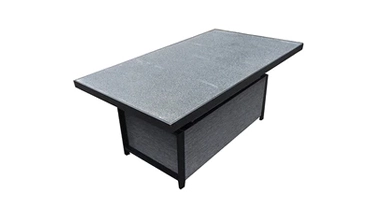
How Outdoor Lifting Tables Support Game-Day Patios and Multi-Use Recreation Spaces
Outdoor recreation spaces often need to support several activities within the same limited area. A patio may function as a casual lounge during the week, a game-day viewing area at the weekend, and an outdoor dining space during social events.
Using separate coffee tables, dining tables, and serving stations can require more storage and make the space difficult to rearrange. An outdoor lifting table offers another approach. Its adjustable structure allows the tabletop to move between a lower lounge position and a raised working or dining position.
This flexibility makes lifting tables useful for patios, sports clubs, pool areas, game rooms with outdoor extensions, villas, and hospitality projects.
Why Recreation Spaces Need Flexible Table Heights
Different activities require different table relationships.
A low table is comfortable when guests are seated on outdoor sofas or lounge chairs. It can hold drinks, books, phones, towels, and small snacks without interrupting conversation.
A higher tabletop is more practical for meals, card games, laptop use, event registration, or preparing equipment. Instead of moving furniture between activities, users can adjust the table to the required height.
Flexible height supports:
Casual lounging
Outdoor meals
Sports viewing
Board and card games
Refreshment service
Temporary work
Activity registration
Small social events
This can improve the value of compact patios where every piece of furniture needs to serve more than one purpose.
Use a Lifting Table for Game-Day Food and Drinks
Game-day patios often begin as lounge spaces and become dining or serving areas as guests arrive.
At a low position, the table can serve outdoor sofas and conversation seating. Drinks and small snacks remain accessible while guests watch a match or wait for the event to begin.
When food is served, the tabletop can be raised to create a more comfortable eating height. This reduces the need for guests to lean forward toward a low coffee table.
The raised surface can hold:
Shared food trays
Drinks
Plates and utensils
Portable speakers
Remote controls
Score sheets
Small decorations
The available load and tabletop area should match the intended activity. Users should not overload the raised surface or place weight near unsupported edges.
Create a Hydration and Equipment Station
Outdoor activities often require a temporary station for water, towels, small equipment, first-aid supplies, and personal belongings.
A lifting table can support this function when positioned near, but not inside, the main activity area. At a raised height, staff and participants can access supplies without repeatedly bending down.
For sports clubs and recreation facilities, the table may be used for:
Water bottles
Cups
Towels
Sunscreen
Scorekeeping materials
Registration forms
Small training equipment
Personal storage baskets
The table should remain on a stable, level surface, and the area around it should be kept clear to prevent congestion.
Switch from Lounge Use to Outdoor Dining
Many patios contain lounge sofas because they support relaxed conversation, but standard low tables are not always comfortable for meals.
A lift-top structure can help convert the same seating area into an informal dining space. This is useful for villas, balconies, pool decks, and hospitality terraces where there may not be room for a separate dining set.
When planning this configuration, check:
Raised tabletop height
Sofa seat height
Leg clearance
Distance between table and seating
Stability in the raised position
Access from each side
Number of expected users
The result is usually more casual than a formal dining table, but it can provide a practical solution for snacks, light meals, and social gatherings.
Compare Tabletop Materials
The tabletop affects appearance, maintenance, weight, and compatibility with outdoor activities.
Tempered glass provides a clean, modern surface and is easy to wipe after food and drinks. A printed, enamel, or decorative glass surface can add visual detail and coordinate with other furniture.
Other outdoor table surfaces may emphasize lower weight, texture, or resistance to visible fingerprints. Buyers should consider:
Cleaning requirements
Heat exposure
Stain visibility
Scratch risk
Product weight
Edge treatment
Water drainage
Visual coordination
Glass tabletops should be handled according to the product instructions and should not be subjected to impacts or unsupported excessive loads.
Evaluate the Lifting Mechanism
The lifting mechanism is the central functional component.
It should move smoothly and remain stable in both low and raised positions. An unstable mechanism can cause the tabletop to move unexpectedly during dining or game use.
During sample evaluation, check:
Opening and closing force
Balance during movement
Locking or support method
Side-to-side movement
Pinch points
Noise
Alignment
Repeated-cycle performance
The table should be operated from the intended position using the recommended method. Users should keep hands and objects away from moving components.
Commercial projects should include the mechanism in routine inspection schedules.
Consider Storage Beneath the Tabletop
Some lifting tables include storage space beneath the top. This can help keep recreation areas organized by holding cushions, covers, games, serving accessories, or small outdoor items.
However, not every storage compartment is fully waterproof. Buyers should confirm whether the area is designed for short-term organization or weather-protected storage.
Items placed inside should not interfere with the lifting components. The compartment should also be easy to clean and ventilate.
For game-day patios, internal storage can hold:
Cards and board games
Table covers
Serving trays
Small cushions
Remote controls
Outdoor accessories
Keeping frequently used items close to the activity area reduces the need for separate cabinets.
Match the Table with Folding Chairs or Chaise Lounges
A lifting table can support different furniture layouts.
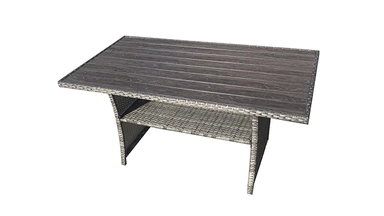
With outdoor sofas, it creates a convertible lounge and dining area. With folding chairs, it can form a temporary game, meal, or registration station. Near chaise lounges, it can serve as a raised refreshment surface when positioned with adequate circulation space.
The table does not need to match every seating type at every height. Buyers should plan which furniture combination will be used for each activity.
When combining products, compare:
Seat height
Armrest clearance
Table dimensions
Raised height
Access around the table
Furniture movement
Visual consistency
A coordinated layout makes the adjustable function more useful and avoids buying a table that is only comfortable in one position.
Plan Space Around the Raised Tabletop
A lift-top table requires additional operating clearance.
The tabletop may move upward, forward, or in another direction depending on the mechanism. Furniture, walls, umbrellas, and users should not block this movement.
Before confirming the layout, measure:
Closed dimensions
Raised dimensions
Direction of movement
Space for the operator
Chair and sofa clearance
Walking routes
Distance from pool edges or steps
The table should be placed on a level surface. Uneven placement may affect stability and mechanism alignment.
Maintain the Table Between Activities
Food residue, dust, leaves, water, and sunscreen should be removed regularly. The frame, tabletop, fasteners, and lifting mechanism should be inspected according to the product’s care requirements.
Check for:
Loose hardware
Unusual movement
Surface damage
Dirt in the mechanism
Water accumulation
Damaged feet
Difficulty opening or closing
Do not force the mechanism if it becomes obstructed. Remove the table from use until the cause has been identified.
What Buyers Should Check Before Bulk Ordering
Commercial buyers should confirm the low and raised heights, tabletop dimensions, frame material, tabletop construction, lifting direction, product weight, packaging, assembly method, and intended load.
A physical sample should be tested with the actual seating planned for the project. This allows buyers to evaluate comfort, clearance, stability, operation, and appearance.
Customization may include frame colors, wicker finishes, tabletop designs, packaging, and coordination with outdoor sofa collections.
Conclusion
Outdoor lifting tables help recreation spaces move between lounging, dining, game-day service, equipment organization, and temporary work without requiring several separate tables.
By carefully reviewing the mechanism, tabletop, storage, layout, and seating compatibility, buyers can create a more adaptable patio that responds efficiently to different activities and group sizes.