

Freestanding vs. Hanging Wicker Patio Swings: Installation Requirements for Commercial Projects
For commercial outdoor projects, the choice between freestanding and hanging wicker patio swings depends largely on installation conditions, space planning, maintenance requirements, and long-term operational needs.
Freestanding swings offer easier installation and greater layout flexibility because they do not require ceiling structures or permanent support points. Hanging swings provide a more traditional swinging experience but require stronger structural preparation and professional installation. For hotels, resorts, restaurants, and outdoor leisure spaces, understanding these differences helps buyers select the right solution.
What Is the Difference Between Freestanding and Hanging Wicker Patio Swings?
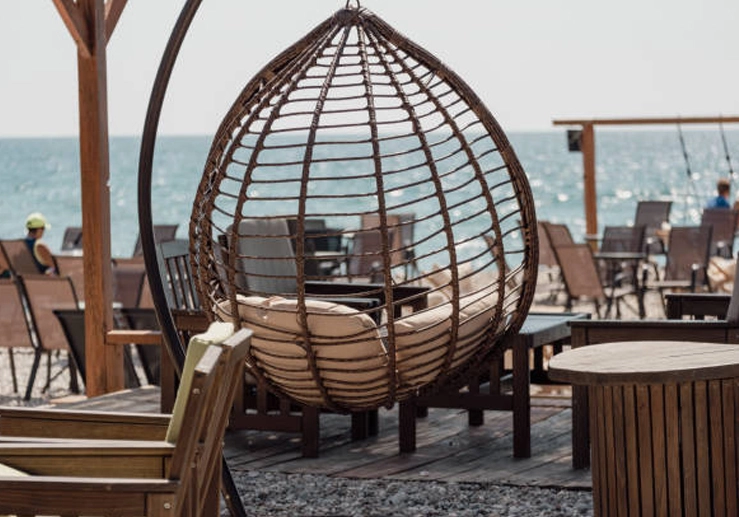
The main difference is how the swing is supported. Freestanding swings use an independent frame that supports the seat, allowing the entire unit to be placed directly on the ground. Hanging swings rely on suspension points connected to a ceiling, beam, or specially designed support structure.
| Feature | Freestanding Wicker Patio Swing | Hanging Wicker Patio Swing |
| Support method | Independent metal frame | Suspended from overhead structure |
| Installation | Simple assembly and placement | Requires suitable hanging points |
| Layout flexibility | Easy to relocate | Usually fixed in one location |
| Structural requirements | Minimal site preparation | Requires strong support structure |
Are Freestanding Wicker Patio Swings Easier to Install?
Yes. Freestanding models are generally easier to install because they include their own support frame. Commercial teams can assemble the swing and position it in the desired outdoor area without modifying existing structures.
This makes them suitable for projects where furniture layouts may change frequently, such as resort gardens, poolside lounges, event spaces, and seasonal outdoor areas.
Key installation advantages include:
No ceiling reinforcement required
Flexible placement options
Easier relocation during layout changes
Lower installation complexity
For commercial buyers managing multiple outdoor areas, these advantages can reduce installation time and labor costs.
What Installation Requirements Do Hanging Wicker Patio Swings Have?
Hanging swings require more careful planning because the suspension system must safely support both the product weight and the dynamic movement created during use.
Before installation, commercial projects should evaluate:
Strength of the overhead structure
Load-bearing capacity of beams or ceilings
Suitable mounting hardware
Available swinging clearance
Safety distance from surrounding furniture
A hanging swing should never be installed on an unsuitable structure simply because the location appears convenient. Proper support is essential for long-term safety and durability.
Which Type Is Better for Hotels and Resorts?
Both options can work well, but the ideal choice depends on the project environment.
| Project Scenario | Recommended Option |
| Poolside relaxation areas | Freestanding swings for flexible arrangement |
| Luxury resort balconies | Hanging swings when structural support is available |
| Garden lounge spaces | Freestanding models for easier installation |
| Permanent outdoor design features | Hanging swings for integrated appearance |
Many commercial projects choose freestanding designs because they allow furniture layouts to adapt to seasonal changes, guest flow, and operational requirements.
Do Freestanding Swings Require Less Maintenance?
Generally, yes. Since freestanding swings do not depend on building structures, maintenance mainly focuses on the swing itself, including the frame, wicker material, cushions, and moving components.
Hanging swings require additional inspection of suspension points, chains, hooks, and mounting hardware. In high-use environments, these components should be checked regularly to ensure continued performance.
How Should Commercial Buyers Evaluate Swing Installation Costs?
The purchase price is only one part of the total investment. Installation requirements can significantly influence project costs.
| Cost Factor | Freestanding Swing | Hanging Swing |
| Initial installation | Lower and simpler | May require professional installation |
| Site preparation | Usually minimal | May require structural assessment |
| Relocation cost | Lower | Higher due to fixed installation |
| Maintenance inspection | Focuses on product condition | Includes support system checks |
For large hospitality projects, selecting the right swing type at the planning stage can help control both installation and long-term operating expenses.
What Should Buyers Ask a Wicker Patio Swing Manufacturer?
Working with an experienced wicker patio swing manufacturer helps ensure the product matches the requirements of commercial applications.
What Installation Method Does the Product Require?
Buyers should confirm whether the swing requires independent support or specific structural conditions.
Is the Frame Designed for Commercial Use?
The frame should withstand frequent use, outdoor exposure, and regular movement.
Are Replacement Parts Available?
For resorts and hotels, access to replacement cushions, hardware, and structural components can extend product service life.
Can the Design Be Customized?
Commercial projects may require specific colors, dimensions, materials, or branding options to match the overall outdoor design.
How Does a Professional Manufacturer Support Commercial Swing Projects?
A reliable wicker patio swing manufacturer provides more than finished products. Professional suppliers help buyers select suitable structures, confirm installation requirements, and develop solutions based on actual project conditions.
For hospitality applications, factors such as durability, safety, maintenance, and visual consistency are equally important as product appearance.
Conclusion
Freestanding and hanging wicker patio swings both provide attractive outdoor relaxation solutions, but their installation requirements are different. Freestanding swings offer flexibility and simpler installation, while hanging swings create a more integrated design when suitable structural support is available.
For commercial projects, choosing the right option requires evaluating the site conditions, maintenance plans, guest usage patterns, and long-term operational needs. Working with an experienced wicker patio swing manufacturer can help ensure the final solution meets both design and practical requirements.
FAQs
Are freestanding wicker patio swings easier to install?
Yes. They include their own support frame and usually require only basic assembly.
Do hanging swings need a strong ceiling or beam?
Yes. They require a secure structure that can safely support the swing and movement loads.
Which swing type is better for resorts?
It depends on the project. Freestanding models offer flexibility, while hanging models provide an integrated design.
Are wicker patio swings suitable for commercial use?
Yes. Commercial-grade models are commonly used in hotels, resorts, and outdoor leisure spaces.
Can freestanding swings be moved after installation?
Yes. Their independent frame makes relocation easier.
What should I check before buying from a swing manufacturer?
Check materials, installation requirements, durability, customization options, and after-sales support.